
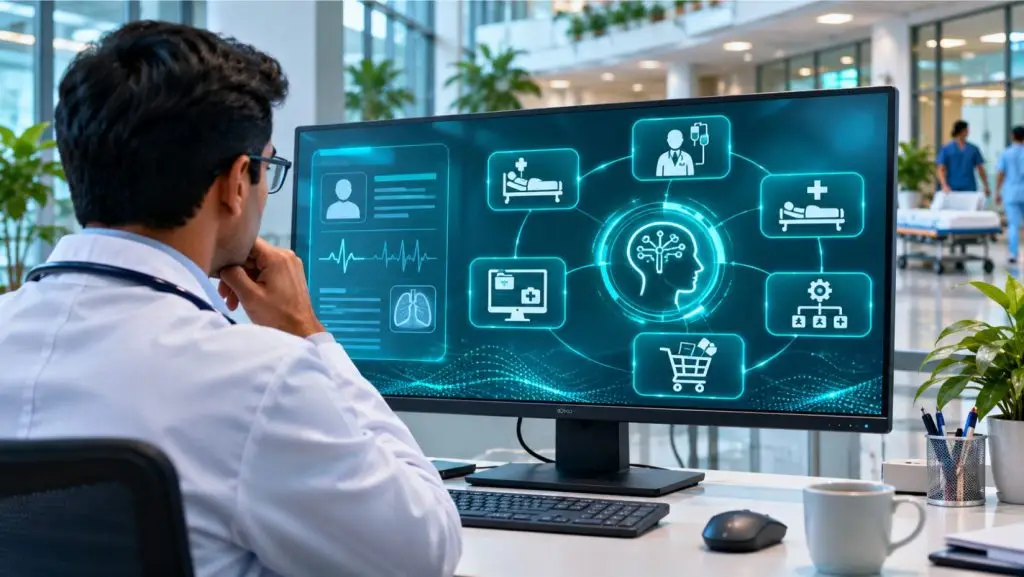
India’s healthcare technology sector has been undergoing a significant digital transformation as hospitals increasingly adopt electronic medical records, automated workflows, and integrated patient management systems.
In February 2022, MyHealthcare announced the launch of its AI-enabled enterprise ecosystem, introducing the MyHealthcare Enterprise Application (MHEA) for hospitals and healthcare institutions.
The platform was designed to bring clinical, administrative, and operational functions together through an integrated hospital information management system.
The launch represented an effort to simplify healthcare workflows, improve access to patient information, and support more coordinated hospital operations.
What Is the MyHealthcare Enterprise Application?
The MyHealthcare Enterprise Application, commonly known as MHEA, is a digital hospital management platform developed by MyHealthcare.
The system was introduced to support healthcare professionals across multiple departments and clinical settings.
Rather than requiring staff to navigate several disconnected applications, MHEA was designed around a single-screen, task-based user experience.
Its capabilities include electronic medical records, workflow management, administrative processes, and operational coordination.
The platform was intended to support both healthcare delivery and the day-to-day activities required to run a hospital.
Key Features of the MyHealthcare AI-Enabled Enterprise Ecosystem
1. AI-Based Electronic Medical Records
Electronic medical records, or EMRs, are a central component of modern healthcare technology.
MyHealthcare introduced AI-enabled EMR capabilities designed for outpatient, inpatient, and emergency care settings.
These systems aim to help healthcare professionals access relevant patient information within their clinical workflows.
Potential benefits of well-implemented EMR systems include improved information availability, better documentation, and more coordinated care.
However, clinical accuracy and patient safety still depend on proper implementation, reliable data, and professional oversight.
2. Single-Screen Hospital Management
One of the platform’s distinguishing design goals was to provide a single-screen experience.
Hospital employees frequently work across multiple systems for appointments, patient records, billing, and other activities.
A consolidated interface may reduce the need to switch between different applications.
MHEA was designed to organize information and tasks according to staff responsibilities, making workflows easier to navigate.
3. Automated Hospital Workflows
The enterprise ecosystem incorporated process automation to support routine hospital operations.
Administrative and clinical processes often involve multiple approvals, handoffs, and documentation steps.
Automation may help reduce repetitive tasks and improve the consistency of workflows.
However, the effectiveness of automation depends on how carefully the system is configured and integrated with existing hospital processes.
4. Outpatient, Inpatient, and Emergency Care Support
MHEA was developed to support several important care environments.
Outpatient care: The platform supports workflows related to consultations, medical records, and associated hospital services.
Inpatient care: The system is designed to help coordinate activities involved in managing hospitalized patients.
Emergency care: Integrated records and workflows can support access to information in time-sensitive clinical settings.
These capabilities are intended to create a more connected healthcare environment.
5. Hospital Procurement and Inventory Management
Hospital management extends beyond clinical care.
Healthcare institutions also need to manage supplies, equipment, procurement, and inventory.
MyHealthcare’s enterprise ecosystem included procurement-related capabilities and a smart stocking platform.
The company described these tools as a way to improve procurement efficiency and support hospital operations.
6. Discharge Process Automation
Hospital discharge involves clinical documentation, billing, coordination, and communication with patients.
Delays in these activities can affect hospital workflows and the patient experience.
MHEA included discharge process automation designed to streamline selected steps.
The actual impact of such systems depends on local hospital practices and implementation.
7. Insurance and Third-Party Administrator Integration
The platform was also designed to integrate with health insurance companies and third-party administrators.
Such connections may help hospitals coordinate relevant insurance-related administrative activities.
The availability and scope of integrations depend on participating organizations and implementation arrangements.
The Role of Artificial Intelligence in Hospital Management
Artificial intelligence can support healthcare operations by helping organize information, identify patterns, and automate selected tasks.
In an enterprise hospital environment, AI-related tools may assist with:
- Presenting relevant information to healthcare professionals
- Supporting clinical documentation workflows
- Automating routine administrative activities
- Improving access to operational data
- Reducing unnecessary navigation between systems
These functions should support, rather than replace, appropriate clinical judgment.
AI systems can produce errors, and their outputs require suitable validation, monitoring, and human oversight.
What Did MyHealthcare Say About Operational Efficiency?
At the time of the 2022 launch, MyHealthcare representatives shared several projected performance improvements.
The company reported that its internal analysis suggested the platform could:
- Improve operational efficiency by an estimated 76%
- Reduce training time by approximately 80%
- Reduce hospital technology operating costs by more than 40%
These were company-reported estimates, not independently established outcomes across all hospitals.
Actual results can vary considerably depending on hospital size, existing infrastructure, staff training, system configuration, and adoption.
Healthcare organizations should evaluate such claims using their own implementation data and measurable performance indicators.
Technology Behind the Enterprise Ecosystem
MyHealthcare described MHEA as being built using an open-source technology stack and a microservices architecture.
Microservices architecture divides a large software application into smaller services that can be developed and managed independently.
This approach can offer flexibility when maintaining or expanding complex enterprise systems.
For healthcare organizations, the practical benefits depend on the platform’s architecture, security controls, reliability, and ongoing technical support.
Why Digital Transformation Matters for Indian Hospitals
Hospitals manage large amounts of information across clinical and administrative departments.
When information is fragmented, healthcare workers may need to repeat data entry or manually coordinate activities between different systems.
Integrated digital platforms aim to reduce these inefficiencies.
Potential advantages include more accessible medical records, improved coordination, streamlined administration, and better visibility into operational performance.
However, successful digital transformation requires more than installing software.
Hospitals must also address staff training, data quality, privacy, cybersecurity, interoperability, and patient safety.
Potential Benefits for Healthcare Professionals
An integrated enterprise platform may offer several operational advantages.
Easier Access to Patient Information
Clinicians may be able to review relevant patient information through connected digital records.
Reduced Administrative Burden
Automated workflows may help reduce repetitive documentation and operational tasks.
Better Coordination Between Departments
Shared information systems can support communication among clinical and administrative teams.
More Consistent Workflows
Configurable digital processes may help organizations standardize selected activities.
These benefits are possibilities rather than guaranteed results.
Potential Benefits for Patients
Patients may also benefit when hospital technology is implemented effectively.
Potential improvements include:
- Better coordination between hospital departments
- More accessible digital health information
- Streamlined appointment and administrative processes
- Reduced duplication of certain paperwork
- Improved continuity of information across care settings
Patient outcomes should be assessed through actual clinical and operational evidence rather than technology claims alone.
Challenges of AI-Enabled Healthcare Systems
Despite their potential, enterprise healthcare platforms introduce important challenges.
Patient Data Privacy
Medical records contain sensitive personal information.
Healthcare organizations must apply appropriate access controls, data protection measures, and relevant legal safeguards.
Cybersecurity
Hospitals are potential targets for cyberattacks.
Digital healthcare systems require ongoing security monitoring, updates, and incident-response planning.
System Integration
Connecting new platforms to existing hospital software can be technically complex.
Staff Training
Healthcare professionals need appropriate training to use new systems safely and efficiently.
AI Reliability
AI-assisted tools may generate inaccurate or incomplete outputs.
Human review and suitable clinical governance remain essential.
MyHealthcare’s Broader Digital Health Ecosystem
MyHealthcare has developed a broader portfolio of digital health technology products and services.
Its publicly described offerings include enterprise hospital applications, electronic medical record systems, remote patient monitoring, homecare management, laboratory information systems, and patient engagement applications.
These solutions reflect a wider industry trend toward connecting different parts of the healthcare journey.
The availability of particular features depends on the institution and deployment.
What the 2022 Launch Meant for Healthcare Technology in India
The introduction of MHEA highlighted growing interest in comprehensive hospital technology platforms.
Instead of focusing on one administrative function, the enterprise ecosystem was designed to connect clinical care with hospital operations.
This approach illustrates how healthcare technology companies have sought to improve efficiency while making patient information more accessible to care teams.
The long-term success of such platforms depends on demonstrated performance, responsible AI use, secure data management, and sustained adoption by healthcare professionals.
Conclusion
The launch of the MyHealthcare AI-enabled enterprise ecosystem in February 2022 represented an important development in the company’s efforts to digitize hospital operations.
Through its MyHealthcare Enterprise Application, the company introduced an integrated platform covering electronic medical records, administrative workflows, procurement, and other hospital management functions.
The system was designed to make healthcare processes more connected and efficient.
While MyHealthcare reported ambitious operational improvement estimates, real-world results require independent evaluation and careful measurement.
As hospitals continue adopting digital technologies, the central priorities remain patient safety, data protection, reliable clinical information, and effective support for healthcare professionals.
Frequently Asked Questions
What is the MyHealthcare Enterprise Application?
The MyHealthcare Enterprise Application, or MHEA, is a hospital management platform designed to integrate clinical and administrative workflows.
When was the MyHealthcare AI-enabled enterprise ecosystem launched?
The launch was announced on February 8, 2022.
Does MHEA use artificial intelligence?
The company described the platform as incorporating AI-enabled electronic medical records and process automation.
What hospital departments does MHEA support?
The platform was designed to support outpatient, inpatient, emergency, administrative, and operational functions.
Can AI replace doctors in hospital management?
AI can assist with selected tasks, but it does not replace professional clinical judgment, appropriate oversight, or responsibility for patient care.
What are the benefits of electronic medical records?
Electronic medical records can support access to patient information, clinical documentation, and coordination between healthcare professionals when properly implemented.
Is the MyHealthcare platform available to hospitals in India?
MyHealthcare markets enterprise healthcare technology solutions to hospitals and healthcare institutions in India. Institutions should contact the company for current availability, deployment requirements, and product details.
Sources and Further Reading
- ETHealthWorld – MyHealthcare Launches AI-Enabled Enterprise Ecosystem (February 8, 2022)
- The Financial Express – MyHealthcare Enterprise Ecosystem Announcement (February 9, 2022)
- Express Healthcare – MyHealthcare Launches Its AI-Enabled Enterprise Ecosystem
- MyHealthcare – Official Website
Editorial note: This article is a retrospective report on the February 2022 product launch. Company-reported performance projections should not be interpreted as independently verified results. The article is not sponsored by MyHealthcare.